The Art of French Onion Soup: Mastering Caramelized Onions for the Perfect Bowl
French onion soup is a timeless classic, a dish that transcends culinary trends with its rich, soul-warming flavors. At its heart lies a single, non-negotiable element: perfectly caramelized onions. These golden, sweet, and deeply flavorful strands are the foundation of every great bowl of French onion soup, transforming humble ingredients into a dish that feels both rustic and refined. While the process of caramelizing onions requires patience, it is far from complicated. With an occasional stir, a watchful eye, and a bit of time, you can unlock the glorious flavor that elevates this soup to iconic status. In this article, we’ll explore the art and science of caramelizing onions, provide a foolproof recipe for French onion soup, delve into its history, offer expert tips, and suggest variations and pairings to make your soup unforgettable.
The Magic of Caramelized Onions
Caramelized onions are the soul of French onion soup, and their preparation is a labor of love that rewards patience with unparalleled flavor. The process involves slowly cooking onions over low heat, allowing their natural sugars to break down and develop a deep, sweet, and slightly nutty taste. This transformation is what sets French onion soup apart from other broth-based dishes.
Why Caramelization Matters
Caramelization is a chemical process that occurs when the sugars in onions are heated, leading to the Maillard reaction—a browning process that enhances flavor through the interaction of sugars and amino acids. The result is a complex, savory-sweet profile that forms the backbone of the soup. Rushing this step or using shortcuts (like adding sugar to speed things up) compromises the depth of flavor, leaving you with a lackluster dish.
Choosing the Right Onions
Not all onions are created equal when it comes to caramelization. The best varieties for French onion soup are those with a high sugar content and moderate pungency, which yield the sweetest, most flavorful results. Here are the top choices:
- Yellow Onions: The gold standard for caramelizing, yellow onions strike a balance between sweetness and savoriness. They’re widely available and affordable, making them the go-to choice for most recipes.
- Sweet Onions (e.g., Vidalia, Walla Walla): These have a higher sugar content, resulting in a pronounced sweetness when caramelized. However, they can be less complex than yellow onions, so consider blending them.
- Red Onions: While less traditional, red onions can add a slightly different flavor profile and a beautiful color. They’re best used in combination with yellow onions for balance.
- Shallots: For a more delicate, refined flavor, shallots can be incorporated, though they’re pricier and typically used as a complement rather than the primary onion.
Avoid white onions, which are sharper and less sweet, as they don’t caramelize as effectively for this dish.
The Caramelization Process: Step by Step
Caramelizing onions is straightforward but requires attention to detail. Here’s a detailed guide to achieving perfect results every time:
- Preparation:
- Slice Uniformly: Cut onions into thin, even slices (about ⅛-inch thick) to ensure consistent cooking. A mandoline can help achieve uniformity.
- Quantity: For a standard recipe serving 4–6, use 3–4 pounds of onions (about 6–8 medium onions). This may seem like a lot, but onions reduce significantly during cooking.
- Cooking Setup:
- Choose the Right Pan: Use a wide, heavy-bottomed pot or Dutch oven. A large surface area allows for even cooking and prevents overcrowding, which can lead to steaming rather than caramelizing.
- Fat: Start with a combination of butter and olive oil (2 tablespoons each for 3 pounds of onions). Butter adds richness, while oil prevents burning due to its higher smoke point.
- Cooking Process:
- Heat: Melt the butter and oil over medium heat, then add the onions, tossing to coat evenly.
- Initial Cooking: Cook for 10–15 minutes, stirring occasionally, until the onions soften and release their moisture. Sprinkle with a pinch of salt to draw out water and enhance flavor.
- Low and Slow: Reduce the heat to medium-low or low. Stir every 5–10 minutes to prevent sticking. The onions will gradually turn translucent, then golden, and finally a deep caramel brown. This process can take 45–60 minutes, depending on the quantity and pan.
- Deglazing: As brown bits (fond) form on the pan’s bottom, deglaze with a splash of water, white wine, or broth, scraping up the fond to incorporate its flavor into the onions. Repeat as needed.
- Finishing Touches:
- Color and Texture: Aim for a rich, mahogany color with a jam-like consistency. The onions should be sweet, with a slight tang from the Maillard reaction.
- Taste Test: Sample the onions to ensure they’re fully caramelized. If they taste sharp or lack sweetness, continue cooking.
Common Mistakes to Avoid
- High Heat: Cooking onions too quickly burns them, resulting in a bitter flavor rather than sweet caramelization.
- Overcrowding: Too many onions in a small pan cause steaming, preventing proper browning.
- Adding Sugar: While tempting, sugar masks the onions’ natural sweetness and can lead to an artificial taste.
- Infrequent Stirring: Neglecting to stir can cause uneven cooking or burning, especially toward the end.
The Perfect French Onion Soup Recipe
With perfectly caramelized onions as the foundation, French onion soup comes together with just a few additional ingredients: broth, seasonings, bread, and cheese. Below is a classic recipe that serves 4–6, designed to highlight the onions’ flavor while balancing richness and depth.
Ingredients
For the Soup:
- 3–4 pounds yellow onions (6–8 medium), thinly sliced
- 2 tablespoons unsalted butter
- 2 tablespoons olive oil
- 1 teaspoon kosher salt, plus more to taste
- ½ teaspoon freshly ground black pepper
- 1 teaspoon fresh thyme leaves (or ½ teaspoon dried thyme)
- 1 bay leaf
- ½ cup dry white wine (e.g., Sauvignon Blanc) or dry sherry
- 6 cups beef broth (preferably homemade or low-sodium store-bought)
- 1 tablespoon Worcestershire sauce (optional, for umami)
- 1 tablespoon balsamic vinegar (optional, for depth)
For the Topping:
- 1 baguette, sliced into ½-inch thick rounds
- 2 tablespoons olive oil (for toasting bread)
- 2 cups grated Gruyère cheese (or a mix of Gruyère and Swiss)
- ¼ cup grated Parmesan cheese (optional, for extra savoriness)
Instructions
- Caramelize the Onions:
- In a large Dutch oven or heavy-bottomed pot, melt the butter and olive oil over medium heat. Add the onions and 1 teaspoon salt, stirring to coat.
- Cook for 10–15 minutes, stirring occasionally, until the onions soften. Reduce the heat to medium-low and continue cooking for 45–60 minutes, stirring every 5–10 minutes, until the onions are deep golden brown and jam-like.
- Deglaze the pan with a splash of white wine or water as needed, scraping up the fond. Set aside once caramelized.
- Build the Soup:
- Add the thyme, bay leaf, and black pepper to the caramelized onions, stirring for 1 minute until fragrant.
- Pour in the white wine or sherry, scraping up any remaining fond. Simmer for 2–3 minutes until the liquid reduces slightly.
- Add the beef broth, Worcestershire sauce (if using), and balsamic vinegar (if using). Bring to a simmer, then reduce the heat to low and cook for 20–30 minutes to meld the flavors.
- Taste and adjust seasoning with additional salt or pepper as needed. Remove the bay leaf.
- Prepare the Topping:
- Preheat the oven to 400°F (200°C). Brush the baguette slices with olive oil and arrange them on a baking sheet. Toast for 8–10 minutes, flipping halfway, until golden and crisp.
- Switch the oven to broil.
- Assemble and Serve:
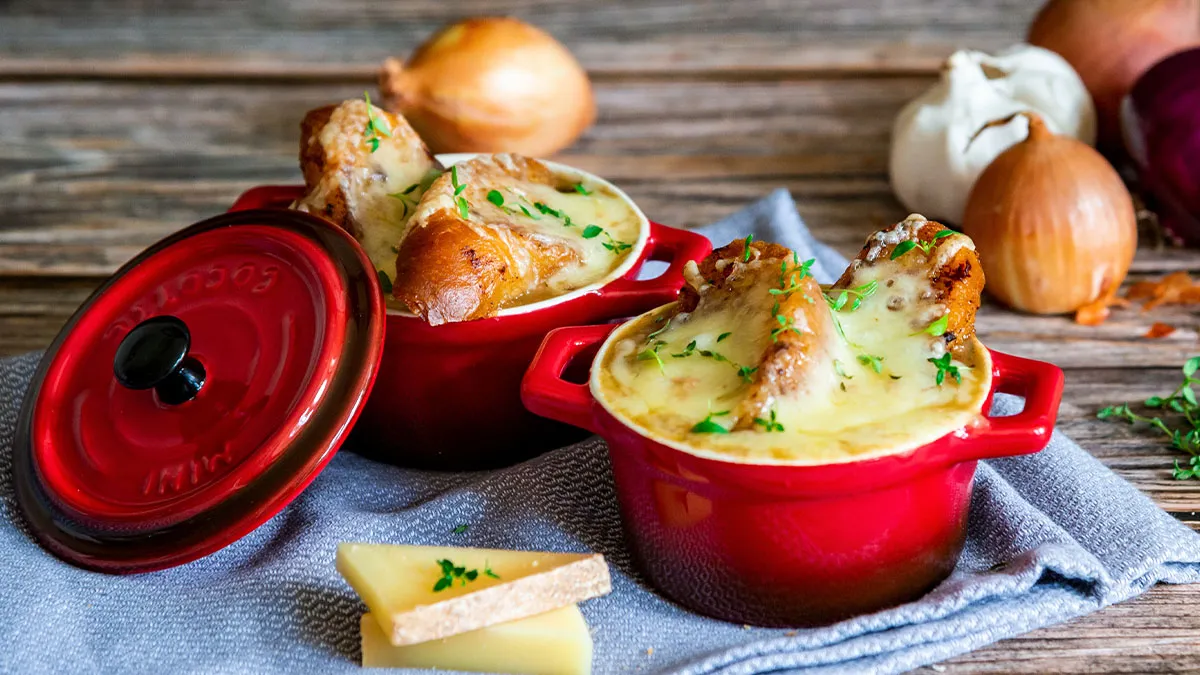
- Ladle the soup into oven-safe bowls or crocks, filling them about three-quarters full.
- Place 1–2 toasted baguette slices on top of each bowl, then sprinkle generously with Gruyère (and Parmesan, if using).
- Place the bowls on a baking sheet and broil for 2–4 minutes, watching closely, until the cheese is melted, bubbly, and lightly browned.
- Serve immediately, cautioning diners about the hot bowls.
Serving Suggestions
French onion soup is a meal in itself, but it pairs beautifully with:
- A Green Salad: A simple salad with arugula, walnuts, and a Dijon vinaigrette cuts through the soup’s richness.
- Wine: A crisp white wine (like the Sauvignon Blanc used in the recipe) or a light red (like Pinot Noir) complements the flavors.
- Crusty Bread: Extra baguette slices on the side are perfect for dipping.
The History of French Onion Soup
French onion soup, or soupe à l’oignon, has roots in French culinary tradition that stretch back centuries. While its exact origins are debated, the dish is believed to have evolved from humble peasant fare, as onions were cheap and abundant. Historical records suggest that onion-based soups were common in ancient Rome, but the modern version with caramelized onions, beef broth, and a cheesy bread topping emerged in France by the 17th or 18th century.
Key Milestones
- 17th Century: Onion soups were documented in French cookbooks, often thickened with bread or eggs. The caramelization technique likely developed as cooks sought to enhance flavor.
- 18th Century: The dish gained popularity in Parisian markets, particularly at Les Halles, where vendors served it to workers and late-night revelers. Legend attributes its rise to King Louis XV, who supposedly created a version with onions, butter, and champagne.
- 19th Century: The addition of beef broth and the iconic bread-and-cheese topping solidified the recipe, reflecting France’s growing culinary sophistication. Restaurants like Au Pied de Cochon in Paris made it a staple.
- 20th Century: French onion soup became a global phenomenon, popularized in North America by French restaurants and cookbooks like Julia Child’s Mastering the Art of French Cooking.
Today, French onion soup is a beloved dish worldwide, cherished for its comforting simplicity and luxurious depth.
Expert Tips for Success
To elevate your French onion soup to restaurant quality, consider these professional tips:
- Use Homemade Broth: While store-bought beef broth works, homemade broth made from roasted bones adds unmatched richness. If using store-bought, choose low-sodium to control seasoning.
- Balance Flavors: The soup should balance sweet (from onions), savory (from broth), and umami (from cheese). A splash of Worcestershire sauce or balsamic vinegar enhances complexity without overpowering.
- Cheese Matters: Gruyère is traditional for its nutty, melty qualities, but a mix with Swiss or Comté can add variety. Avoid pre-shredded cheese, which may contain anti-caking agents that affect texture.
- Make Ahead: Caramelized onions can be prepared days in advance and refrigerated or frozen. The soup base (without bread and cheese) also freezes well for up to 3 months.
- Oven-Safe Bowls: Invest in ceramic crocks for the classic presentation. If unavailable, toast the bread with cheese separately and place it on the soup just before serving.
Variations on the Classic
While the traditional recipe is hard to beat, French onion soup lends itself to creative twists. Here are some variations to try:
- Vegetarian French Onion Soup: Replace beef broth with a rich vegetable or mushroom broth. Add a dash of soy sauce or miso for umami.
- Red Wine Version: Substitute red wine for white wine for a deeper, earthier flavor. A Cabernet Sauvignon or Merlot works well.
- Different Cheeses: Experiment with cheeses like fontina, mozzarella, or aged cheddar for a unique twist.
- Gluten-Free: Use gluten-free bread or croutons for the topping.
- Spicy Kick: Add a pinch of cayenne or red pepper flakes to the soup for a subtle heat.
Troubleshooting Common Issues
- Soup Too Sweet: Over-caramelized onions or sweet onion varieties can make the soup cloying. Balance with a splash of vinegar or extra broth.
- Bland Flavor: If the soup lacks depth, simmer longer to concentrate flavors or add a touch of Worcestershire sauce.
- Soggy Bread: Ensure the bread is well-toasted before adding it to the soup, and don’t overload the bowl with broth.
- Cheese Won’t Melt Properly: Grate cheese finely and broil close to the heat source. Avoid thick layers that take too long to melt.
Pairing and Presentation
French onion soup is a showstopper on its own, but thoughtful pairings and presentation can elevate the experience:
- Glassware and Tableware: Serve in classic white crocks with handles for authenticity. Pair with simple, elegant wine glasses and linen napkins for a refined touch.
- Garnishes: A sprinkle of fresh thyme or chives adds color and freshness.
- Occasions: This soup is perfect for cozy winter dinners, holiday gatherings, or as a starter for a French-themed menu.
The Science Behind the Dish
Understanding the science of caramelization and broth can help you master French onion soup:
- Maillard Reaction: This reaction, triggered by heat, creates hundreds of flavor compounds, giving caramelized onions their complexity.
- Broth Chemistry: Beef broth’s gelatin content (from collagen in bones) provides a silky mouthfeel. Low-sodium broth allows the onions’ flavor to shine.
- Cheese Melting: Gruyère’s high moisture and fat content ensure a gooey, stretchy melt, enhanced by broiling for caramelization.
Conclusion
French onion soup is a testament to the power of simple ingredients transformed through care and technique. Perfect The star of the show is the caramelized onions, which require time and patience but reward you with a depth of flavor that’s nothing short of magical. By mastering the art of caramelization and balancing the soup’s components—broth, bread, and cheese—you can create a bowl that’s both comforting and sophisticated. Whether you stick to the classic recipe or experiment with variations, this dish is sure to impress and delight. So grab your onions, set aside an hour, and let the slow, steady process of caramelization work its magic. Your perfect bowl of French onion soup awaits.